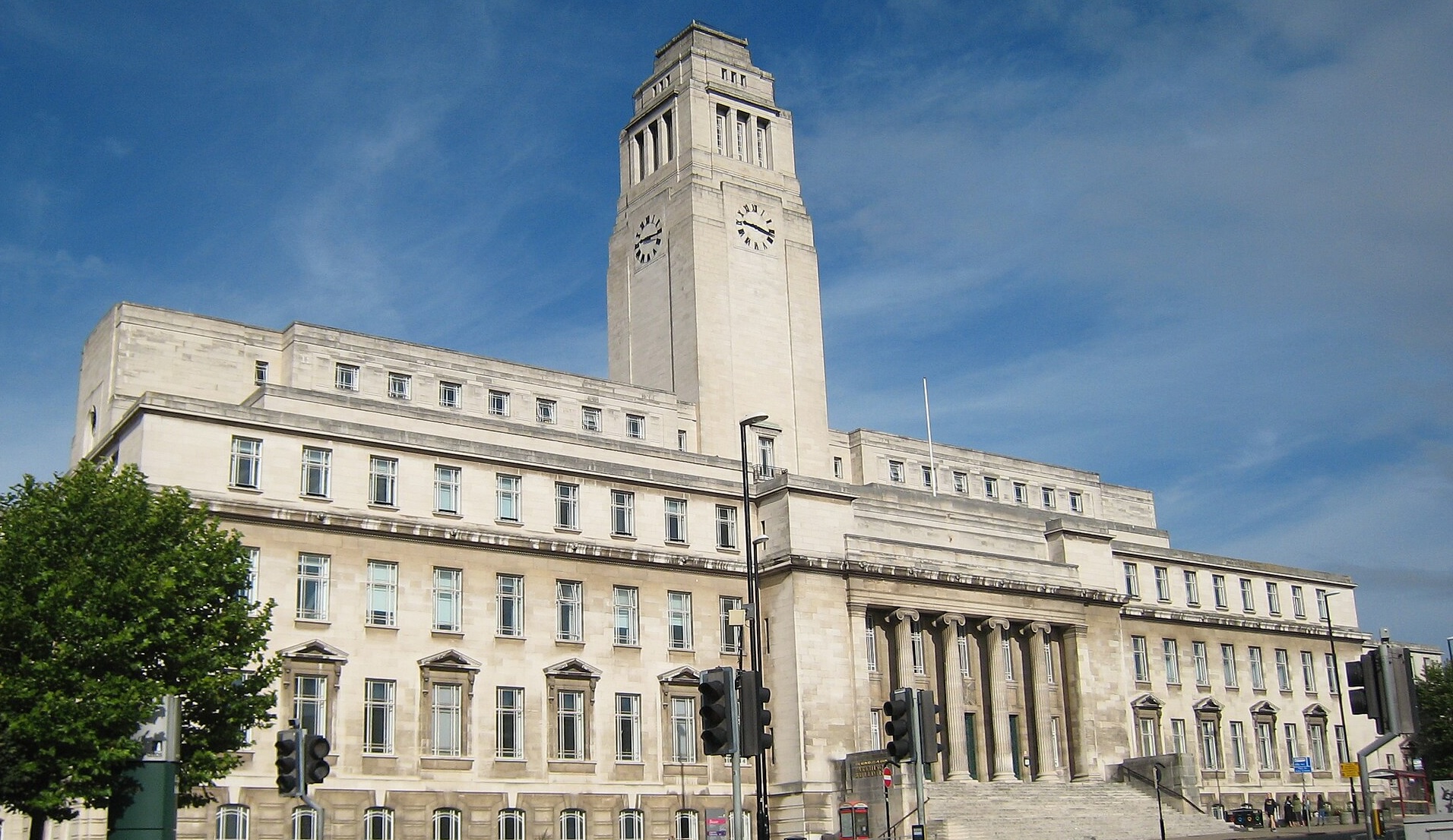
The University of Leeds is one of the United Kingdom’s major research universities, with roots in the nineteenth century and a strong civic tradition. Its development grew out of earlier educational institutions in Leeds, and it received its royal charter in 1904. Since then, it has developed into one of the UK’s leading universities, combining academic excellence with a strong public mission.
The University of Leeds has a broad and influential alumni tradition across politics, business, science, media, sport, and the arts. Official alumni pages highlight graduates working in acting, art and design, politics, broadcasting, science, and many other fields, reflecting the university’s wide academic reach and social impact.
Leeds is especially well known for business, economics, law, medicine, engineering, computer science, geography, education, media and communication, arts and humanities, and a wide range of social sciences. Its strength lies in combining subject breadth with a large-scale research environment and strong professional relevance across many disciplines.
The University of Leeds is a comprehensive research university with a broad academic portfolio organised through faculties, schools, and interdisciplinary institutes. Its course range spans arts and humanities, social sciences, business, engineering, medicine and health, and the sciences, giving students both subject depth and broad academic opportunity.
One of Leeds’ defining features is the way it combines the scale and breadth of a major research university with a strong student identity and a large campus environment in a lively city. It is known for research strength, international reach, and a wide variety of academic and extracurricular opportunities. It also has a strong emphasis on widening access and supporting students from a wide range of backgrounds.
Undergraduate admission to Leeds is competitive and holistic. The university states that the personal statement is an important part of the UCAS application, particularly where courses attract many more applicants than available places. Admissions decisions also depend on academic qualifications, course-specific entry requirements, English language qualifications where relevant, academic references, and contextual information in some cases. Meeting the minimum requirements does not guarantee an offer.
The University of Leeds is a globally recognised, research-led university with strong academic breadth, a major civic tradition, and a vibrant student environment. It is especially attractive to students seeking academic ambition, subject flexibility, and the experience of studying at one of the UK’s leading large universities.
The personal statement is an important part of your UCAS application.
It helps admissions staff at the University decide whether to make you an offer. Some courses have many more applicants than places and there may be many students with good grades applying for the same course as you.
Your personal statement is your chance to tell us why you want to study a particular course and why you would make a great student. It gives evidence of your skills, knowledge and experience.
The personal statement is split into three questions:
Why do you want to study this course or subject?
How have your qualifications and studies helped you to prepare for this course or subject?
What else have you done to prepare outside of education, and why are these experiences useful?
Read more about personal statements on the UCAS website.
Your answer to each question needs to be at least 350 characters, and there is an overall character limit of 4000 characters.
Your personal statement is your chance to stand out from the crowd. Your answers should be unique and individual to you, but some things to include are:
Enthusiasm and motivation – your passion for the course should be clear and relate to you and your experiences (such as projects, field trips or experiences at school that sparked your interest in your subject).
Understanding of the subject – you need to show you have some knowledge and understanding, even if you have not studied the subject at high school or college. If you have done some reading about the subject, outside of school, mention this.
Academic prizes or scholarships – this will help you stand out and show evidence of your potential.
Career aspirations – even if you do not have clear career plans yet, you can show you have thought about your future career and how your chosen degree could help you achieve this.
Relevant work experience/voluntary activities – explain what skills you have gained from the experience, including skills that would be useful in your university studies.
Non-academic interests – your hobbies (such as sports, baking or reading) show your personality and can be a chance to demonstrate different skills.
What you will contribute to the university community – we want to know what you can bring to Leeds, as well as what you want to get out of university life.
If you are an international student, you should also mention:
Why you want to study in the UK.
Why you want to be an international student, rather than study in your own country.
Plagiarism (copying) – all statements will be checked for plagiarism. Your statement must be your own work so do not use templates. If you have applied before, check your personal statement is completely up to date and relevant to your current application.
Skills without examples – show how you have developed the skills you think you will need, don't just list them.
Listing subject knowledge – explain how your knowledge has helped you build career aspirations, choose your degree, or prepare for coming to university.
Repeating qualifications – don't repeat information covered elsewhere on the application. This uses up valuable space in your personal statement.
Short answers – make the most of the space you have. A short answer suggests you lack passion for or commitment to the course you are applying for.
Write your personal statement in MS Word (or similar) first, so you can check your spelling and grammar before you add it into your application.
Get someone else, like your tutor, family or friends, to read your statement to check for any errors and make suggestions before you submit it. You may need a few drafts before you are happy with the final version.
If English is not your first language, you could mention any opportunities you have had to use English (such as an English-speaking school or work with a company that uses English).
Use plain, clear English. Be careful with humour, quotes or anything unusual. The admissions tutor might not have the same sense of humour as you!
Don’t exaggerate. If you are invited to an interview, you might be asked for more detail about what you have written.
Check the faculty or school website of your chosen course for guidance on your personal statement - especially important if you are applying for a course in medicine or dentistry. For example, see Leeds University Business School's 8 ways to perfect your UK university application.
Check UCAS application deadlines to make sure you apply before the closing date. For courses in medicine and dentistry, this is earlier than many other courses.