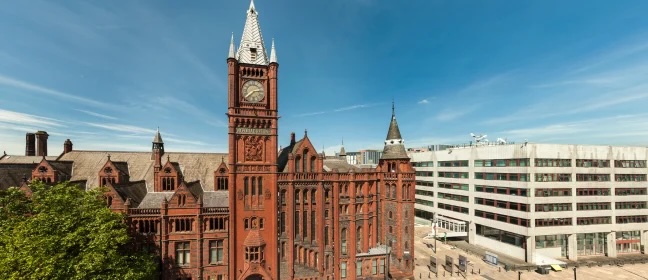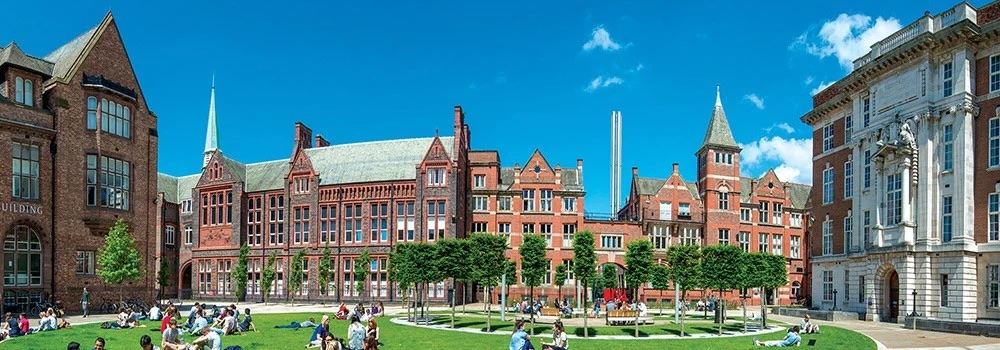
The University of Liverpool is one of the UK’s great civic universities and proudly describes itself as The Original Redbrick. Its roots go back to University College Liverpool, founded in 1881, and the university received its royal charter in 1903. Its development reflects the rise of modern higher education in industrial Britain and the close relationship between academic excellence, public purpose, and the life of a major city.
The University of Liverpool has a strong and diverse alumni tradition, with graduates making an impact across academia, public service, business, science, medicine, media, and the arts. Its alumni community reflects the university’s long-standing role as a major centre of education and research with both national and international influence.
Liverpool is especially well known for medicine and life sciences, veterinary science, architecture, engineering, materials, computer science, physics, chemistry, law, business, and a broad range of humanities and social sciences. It combines subject breadth with strong research capacity and a tradition of innovation.
The University of Liverpool is a comprehensive research university with a wide academic portfolio organised through a range of schools and departments. Its admissions and academic organisation are highly course-specific, reflecting both disciplinary depth and institutional breadth.
One of Liverpool’s defining features is the way it combines the heritage of a historic redbrick university with the energy of a modern research-intensive institution in the heart of a major world city. It is known for academic excellence, innovation, and a strong commitment to making a positive impact on society.
Undergraduate admission to Liverpool is competitive and is handled through UCAS. The university considers each application on its own merits and may take into account academic qualifications, English language qualifications, the personal statement, references, and any additional requirements relevant to the course. Meeting the entry requirements does not guarantee an offer.
The University of Liverpool is a globally connected, research-led university with deep historical roots, broad academic strength, and a strong civic identity. It is especially attractive to students seeking a balance of academic ambition, subject breadth, and the opportunities of studying in a major UK city.
The University of Liverpool is looking for applicants with strong academic ability, appropriate preparation for their chosen course, and clear evidence that they are ready to succeed in a university environment.
First, Liverpool places significant importance on academic qualifications and course-specific entry requirements. Applicants need to meet, or be predicted to meet, the relevant standards for their chosen programme, including any required subjects and general expectations in literacy and numeracy.
Second, the university considers applications holistically. Depending on the course, this may include academic qualifications, English language qualifications, the personal statement, references, and any additional requirements relevant to the programme.
Third, Liverpool values subject fit and genuine motivation. Its personal statement guidance makes clear that applicants should understand the course, reflect on their experiences, and show why they would be a strong addition to the university.
Fourth, the university is looking for students who can contribute to a research-led and ambitious academic community. Strong applications usually show clear preparation, thoughtful interest in the subject, and the ability to communicate effectively and honestly.
Finally, Liverpool also places importance on fairness and equal opportunity, stating in its admissions policy that each application is considered individually on its own merits.
In summary, the University of Liverpool is looking for students who are academically capable, well prepared for their chosen subject, genuinely motivated, and able to demonstrate their potential through a thoughtful and relevant application.