Overview
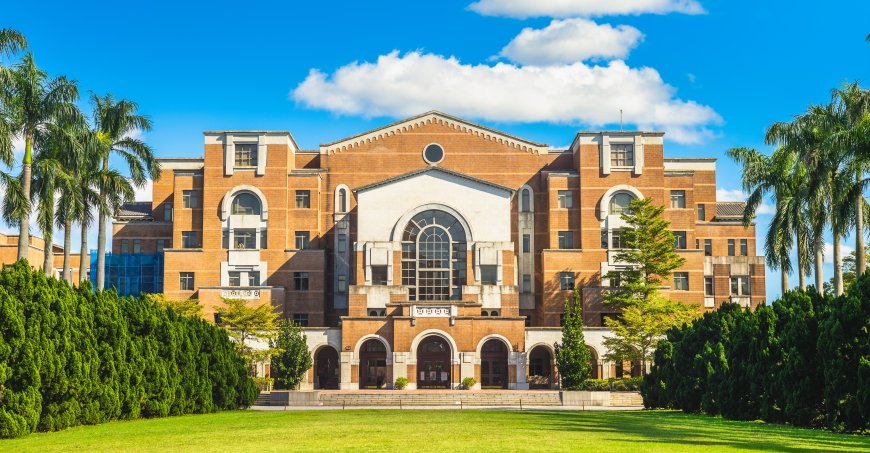
National Taiwan University (NTU) is the leading comprehensive public research university in Taiwan and one of the most internationally influential universities in the Chinese-speaking world. Located in Taipei, NTU is especially strong in engineering, computer science, medicine, life sciences, agriculture, social sciences, humanities, and management.
History
NTU was founded in 1928 as Taihoku Imperial University during the Japanese colonial period. After World War II, it was reorganized and developed into today’s National Taiwan University. The university has played a foundational role in the development of modern higher education in Taiwan and remains a central institution for academic research and talent cultivation.
Notable Alumni
NTU has educated many influential figures in Taiwan and beyond. Its alumni are active in government, academia, technology industries, medicine, law, and business. As Taiwan’s flagship university, NTU has had far-reaching influence in public leadership, semiconductor and technology innovation, medical research, and academic development.
Strong Academic Fields
NTU is particularly strong in electrical engineering, computer science, artificial intelligence, mechanical engineering, materials science, civil engineering, medicine, life sciences, agriculture, public health, economics, management, law, social sciences, and the humanities. It combines strength in fundamental scholarship with interdisciplinary innovation and advanced research.
Academic Structure
NTU has a highly comprehensive academic structure spanning the humanities, sciences, engineering, medicine, management, law, social sciences, public health, electrical engineering and computer science, and bioresources and agriculture. In addition, the university has established an International College that offers fully English-taught interdisciplinary programs for international students.
Distinctive Features
NTU stands out for its position as Taiwan’s flagship university, its strong research capacity, and its location in Taipei, which offers close links to major technology, medical, and research ecosystems. The establishment of the International College also reflects NTU’s growing emphasis on English-medium education, global collaboration, and interdisciplinary talent development.
Admissions
For international applicants, NTU admissions are generally handled through the university’s overseas admissions system, which covers undergraduate, master’s, and doctoral degree programs. The official international admissions platform provides information on eligibility, application procedures, tuition, scholarships, and degree options. In addition, the International College has its own admissions page for English-taught interdisciplinary programs aimed at international students.