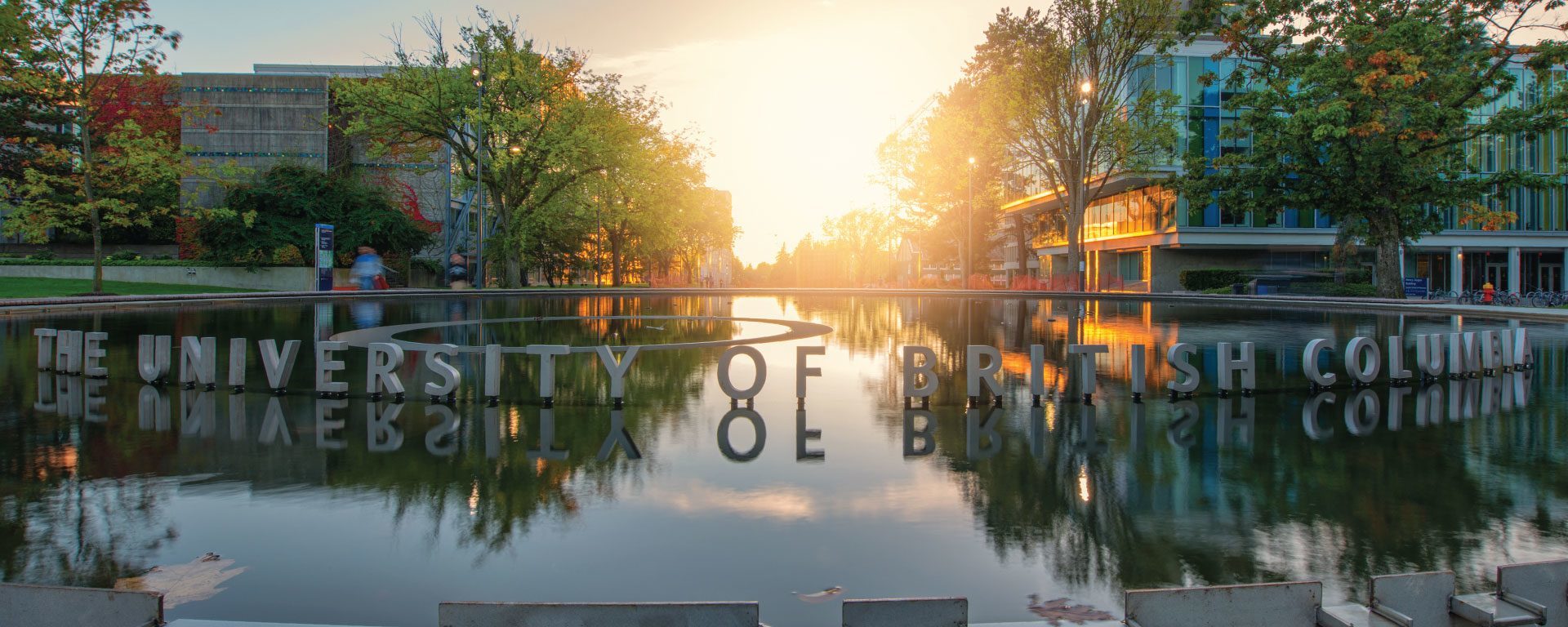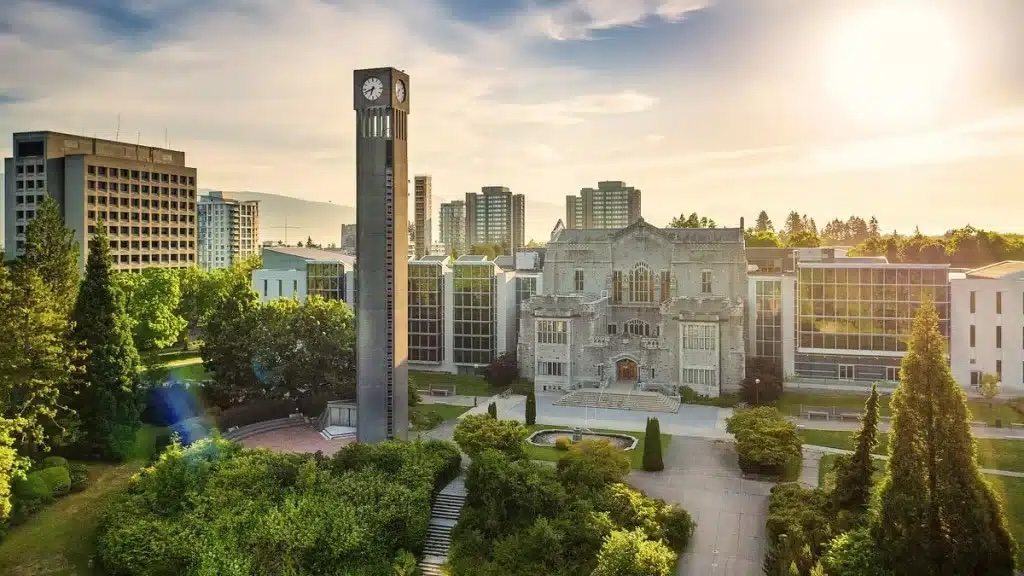
The University of British Columbia (UBC) is one of Canada’s leading public research universities. It is widely recognized for its strong academic reputation, global outlook, and research excellence. UBC has two main campuses: the Vancouver campus and the Okanagan campus. The university offers students a dynamic academic environment, rich research opportunities, and a beautiful campus setting.
UBC is known for combining rigorous academics with interdisciplinary learning and global engagement. Students can choose from a wide range of programs in science, engineering, business, health-related fields, environmental studies, social sciences, and the arts. The university is especially attractive to students who want both strong academics and access to research, innovation, and real-world learning opportunities.
Admission to UBC is competitive. The university does not evaluate applicants based only on grades. Instead, it takes a broader view of each application and considers the breadth, rigour, and relevancy of a student’s course selection, along with academic performance in key subjects related to the intended area of study.
For many undergraduate applicants, the Personal Profile is also an important part of the admissions process. Through this section, UBC looks beyond academics and learns more about a student’s experiences, interests, initiative, community involvement, and personal growth. As a result, successful applicants often show both strong classroom performance and meaningful engagement outside school.
The level of competition can vary by campus, faculty, and program. Some programs are more selective than others, especially those with limited seats or higher academic expectations. Students applying to UBC usually need solid academic preparation, thoughtful planning, and a well-developed application.
UBC is especially well known for its strength in engineering, computer science, business, life sciences, health-related fields, environmental studies, and natural resources. Its large research ecosystem and broad academic structure allow students to explore both depth in a major and connections across disciplines.
In engineering, UBC is recognized for strong technical training, innovation, and practical learning. Students benefit from a research-intensive environment and opportunities to connect academic study with real-world applications.
In computer science, UBC offers a thorough grounding in software design and computing, with learning opportunities in areas such as databases, operating systems, software engineering, security, web development, machine learning, data mining, and advanced algorithms.
Business is another major strength at UBC. The Sauder School of Business is well known in Canada and internationally, and its programs are attractive to students interested in finance, marketing, accounting, entrepreneurship, and management.
UBC is also highly attractive for students interested in environmental and sustainability-related fields. Its academic strengths in environmental science, land and food systems, forestry, and related areas make it a strong choice for students who care about climate, conservation, sustainability, and the relationship between people and the natural world.
In health-related fields, UBC has strong offerings in nursing, life sciences, and health-focused study pathways. Students interested in medicine, public health, biomedical research, or healthcare professions often find UBC appealing because of its strong academic foundation and research environment.
Students are often drawn to UBC because it offers a combination of academic prestige, strong research opportunities, an international student community, and an exceptional location. The Vancouver campus in particular is widely admired for its natural beauty and global city environment, while the Okanagan campus offers a more close-knit academic experience.
Overall, UBC is an excellent choice for students who want a university with strong academics, broad program options, global recognition, and a vibrant campus life.
First, we make sure you meet UBC’s admission requirements. Have you graduated from high school? Can you demonstrate a certain level of English? Do you meet the specific requirements for the degree you’re applying to? If you meet these admission requirements, we take a closer look at your application.
UBC considers your grades in all Grade 11 (junior level) and Grade 12 (senior level) classes, paying special attention to courses that relate to the degree you’re applying to. Specifically:
We look at your grades in all academic courses. That doesn’t include career education courses, physical and health education courses, faith-based courses, skills-based courses, or courses in applied design and technology. To encourage you to explore subjects outside your comfort zone, we’ll exclude your lowest grade (as long as the course is not a degree-specific requirement or relevant to your intended area of study at UBC).
We look at your grades in courses that fall under key subject categories related to your chosen degree. Check the admission requirements for your chosen degree to see which of the following subject categories apply: Language Arts, Mathematics and Computation, Sciences, Second Languages, Social Studies, and Visual and Performing Arts. If you completed a Grade 11 (junior level) and Grade 12 (senior level) course in the same subject, we’ll focus on the Grade 12 (senior level) grade.
We look at your grades in key courses. Your key courses will be determined by your chosen degree, but English 12 (senior-level English) or Pre-Calculus 12 (senior-level Calculus) are among the most common.
UBC also looks closely at which courses you chose to take in high school.
Did you pursue all of your academic interests by taking a range of different subjects?
Did you challenge yourself by taking academic courses, advanced courses, or first-year university courses?
Did you demonstrate knowledge in your chosen area of study by taking courses related to the degree you applied to at UBC?
The personal profile is an important part of UBC’s online application. It is required for most high school applicants, and for university or college transfer students applying to certain programs. It gives us a sense of who you are, what you’ve overcome, and what you’ve achieved. It also helps us assess whether you’re prepared for university studies and deserving of an entrance scholarship or award by telling us what you’ve learned about your experiences, your academic and extracurricular achievements, and your leadership qualities.
If you are a well-qualified student attending a post-secondary institution, we welcome your application to transfer to UBC. UBC may assess post-secondary applicants on a combination of factors, including your grade point average (GPA), any required prerequisite courses, and a review of your overall academic history. We may also require you to submit a personal profile, supplemental application, portfolio, or audition.
No admission data available.
The personal profile is a crucial section in your UBC application. This is your chance to tell us about the things that are important to you, your significant achievements, what you’ve learned from your experiences, and the challenges you’ve overcome. It’s our chance to determine whether you’re a good fit for UBC and if you’ll receive an entrance scholarship.
You must complete a personal profile as part of your online application if you are a high school student applying to any degree on UBC’s Okanagan or Vancouver campuses, except for the Bachelor of Design in Architecture, Landscape Architecture, and Urbanism, Dental Hygiene, and Music.
You must also complete a personal profile if you are a university or college transfer student applying to the Bachelor of Nursing on the Okanagan campus, or the Bachelor of Commerce or the Bachelor of International Economics on the Vancouver campus.
Each of the personal profile questions requires short essay responses (500 – 2100 characters, approximately 50 – 500 words), so you’ll want to think about your answers before you start your online application. Here are three tips to keep in mind:
1. Take time to reflect. Instead of simply listing your accomplishments and experiences, tell us what you’ve learned from them.
2. Be specific. Use details to provide context and elaborate on your answers.
3. Be true to who you are. Don’t focus on what you think we want to hear. Use your unique voice to tell us what you want to say.
Note that within the application system, each personal profile question has a character limit (which is not the same as word count). Pay attention to each question’s character limit because your answer will get cut off if you go over the maximum.
Depending on which degree(s) you apply to, you’ll be asked to answer some or all of the following questions in your personal profile:
Tell us about who you are. How would your family, friends, and/or members of your community describe you? If possible, please include something about yourself that you are most proud of and why.
What is important to you? And why?
Describe up to five activities that you have pursued or accomplishments achieved in one or more of the following areas. Please outline the nature of your responsibilities within these activities:
Club
Family/community responsibilities
Creative or performing arts
Work/employment
Athletics
Volunteer
Service to others
Other(s)
Tell us more about one or two activities listed above that are most important to you. Please explain the role you played and what you learned in the process. You will be asked for a reference who can speak to your response.
Additional information: You may wish to use the space below to provide UBC with more information on your academic history to date and/or your future academic plans. For example: How did you choose your courses in secondary school? Are there life circumstances that have affected your academic decisions to date? What have you done to prepare yourself specifically for your intended area of study at UBC?
Please submit the names and contact information of two referees who know you well and can comment on your preparedness for study at UBC.
Examples of referees include an employer, a community member, a coach, a teacher/instructor, or anyone who knows you well.
One of the referees you select must be able to speak to one of the activities/experiences described in one of your long-answer responses above.
For applicants who are currently attending a high school, one of your referees must be a school official (e.g., Grade 12 or senior year counsellor, teacher, or IB coordinator). Neither referee should be a friend, family member, or paid agent.
Note that UBC does not send a link to references. We will contact your references directly, after offers of admission have gone out.
For the Bachelor of Education personal profile only:
Why do you want to become a teacher?
Describe the kind of teacher you want to be. Give examples.
Equity, Diversity, Inclusion and Decolonization are integral to the teaching profession. Give one or more examples from your experience with youth that demonstrates work with individuals from varied backgrounds, perspectives, identities, and needs. Explain what you learned from the experience(s), and how this will prepare you to be an equitable educator. Do not repeat information already stated above.
For the Bachelor of Commerce (UBC Vancouver) personal profile only:
Explain how you responded to a problem and/or an unfamiliar situation. What did you do, what was the outcome, and what did you learn from the experience?
How are you positively impacting your community? How do you plan to leverage your UBC Sauder experience to enhance these efforts?