History
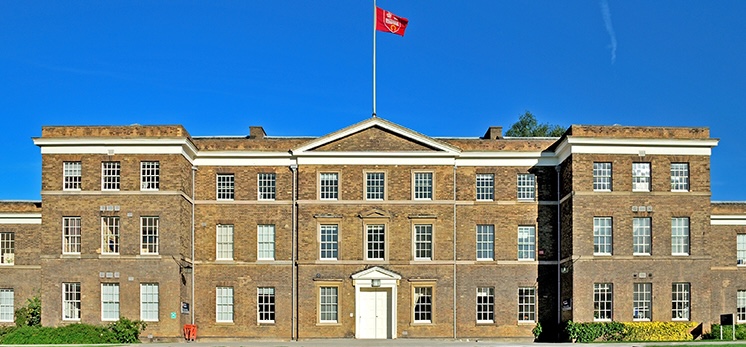
The University of Leicester was founded in 1921 as Leicester, Leicestershire and Rutland University College. It was created as a living memorial to local people who made sacrifices during the First World War, and this origin is reflected in the University’s motto, Ut vitam habeant – “so that they may have life”. Students were first admitted in 1921, the institution became University College, Leicester in 1927, and it was granted its Royal Charter 30 years later, giving it full university status and degree-awarding powers.
Notable Alumni
The University of Leicester has a growing and influential alumni tradition across science, business, public life, and the arts. Official alumni profiles highlight graduates such as Professor Peter Atkins, one of the world’s best-known chemistry authors and educators. The wider University community is also closely associated with major public figures and internationally recognised researchers, reflecting Leicester’s continuing impact across academic and cultural life.
Strong Subjects
Leicester is especially well known for medicine and biological sciences, engineering, computing and mathematical sciences, physics and astronomy, geography, geology and the environment, archaeology, law, media and communication, criminology, sociology, economics, and business. One of the University’s most distinctive strengths is its combination of scientific discovery and social impact, with achievements ranging from DNA fingerprinting to major work in health, space science, and public policy.
Academic Structure
The University of Leicester is organised around the College of Life Sciences, the College of Science and Engineering, the College of Social Sciences, Arts and Humanities, and the University of Leicester School of Business, which now operates as a College-level academic unit. This structure supports both subject depth and interdisciplinary collaboration across a wide range of fields.
Distinctive Features
One of Leicester’s defining characteristics is that it combines a strong civic mission with a research-led academic culture. Its origins as a living memorial give it a distinctive identity, while its modern reputation is built on world-changing research, strong student support, and a broad academic portfolio. Leicester also stands out for its Gold rating in the Teaching Excellence Framework 2023, reflecting the strength of its student experience and outcomes.
Admissions
Undergraduate admission to Leicester is competitive and holistic. Applications are made through UCAS, and the University considers the full application, including qualifications, the personal statement, and the academic reference. The personal statement is especially important because it helps admissions tutors assess whether an applicant is suitable for the course, and for some applicants it may be the first and only opportunity to make that case clearly. Meeting the entry requirements allows an applicant to be considered, but does not guarantee an offer.
Summary
The University of Leicester is a research-led university with a strong civic identity, broad academic strengths, and a distinctive history. It is especially attractive to students who want a university with strong science and social science traditions, meaningful research impact, and a supportive but ambitious academic environment.