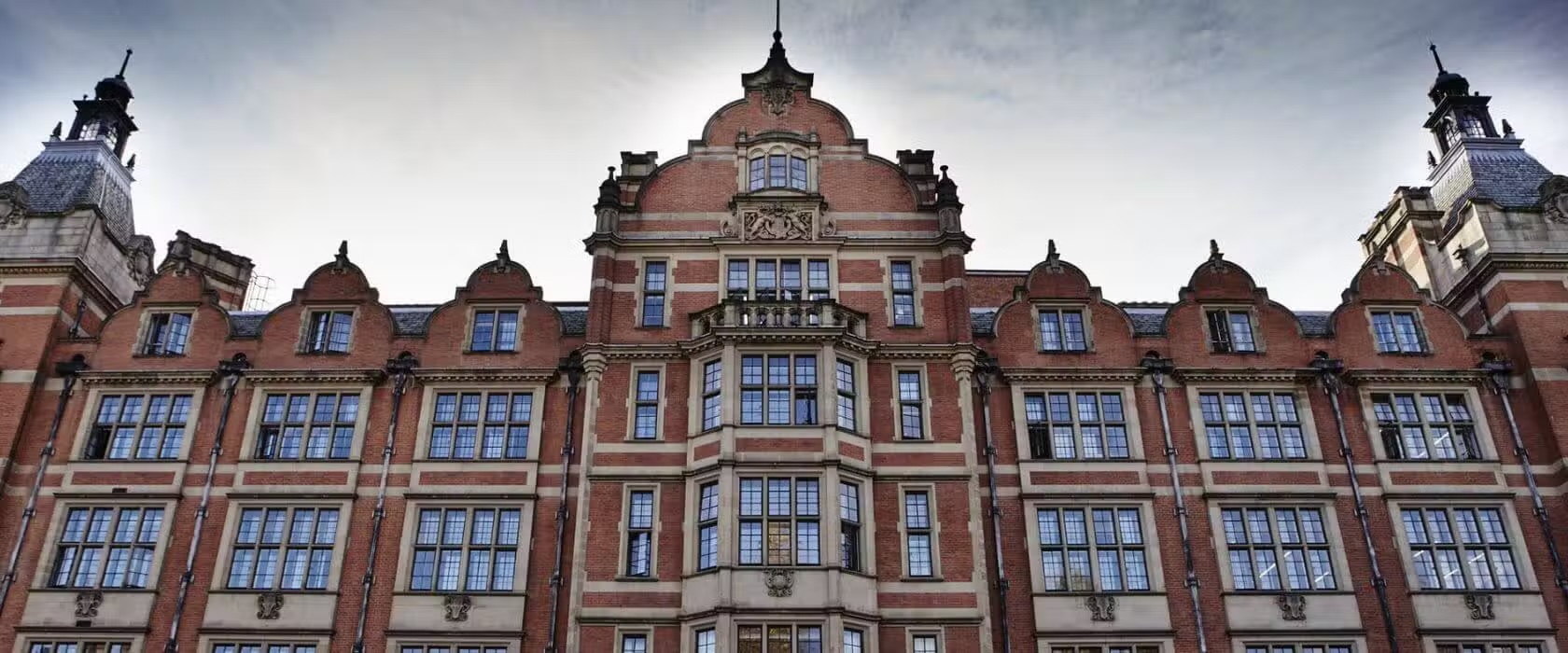
The London School of Economics and Political Science was founded in 1895 and has since developed into one of the world’s leading institutions for the social sciences. From its earliest years, LSE was established with a strong commitment to understanding society, public policy, economics, politics, and global affairs through rigorous academic study.
LSE has one of the strongest alumni traditions in the world in politics, economics, law, diplomacy, media, and public policy. Its former students include political leaders, Nobel Prize winners, major economists, legal scholars, and internationally influential public figures. This alumni tradition is one of the foundations of the school’s exceptional global influence.
LSE is especially well known for economics, politics and international relations, law, sociology, social policy, geography, accounting and finance, management, statistics, data science, and other social science disciplines. Its academic identity is highly distinctive because it is a specialist university focused primarily on the social sciences rather than a broad comprehensive institution.
LSE is organised through a range of academic departments and institutes rather than through a broad faculty structure like many comprehensive universities. This structure reflects its specialist identity and allows the school to maintain depth and intensity across the social sciences.
One of LSE’s defining features is that it combines specialist social science focus, world-class research, and a central London location. The school is known for intellectual intensity, global relevance, policy impact, and a highly international student body. Compared with broader universities, LSE stands out for its concentrated academic identity and strong links to public policy, economics, government, media, and international institutions.
Undergraduate admission to LSE is extremely competitive. The school does not interview for places, so the personal statement is a particularly important part of the application. LSE states that it considers all information in the UCAS application, including academic results, the personal statement, the reference, and contextual information where relevant. Meeting the minimum requirements does not guarantee an offer.
LSE is a globally renowned specialist university for the social sciences, combining academic excellence, international influence, and exceptional policy relevance. It is especially attractive to students who want a highly focused, intellectually demanding education in economics, politics, law, society, and global affairs.
LSE is looking for applicants with very strong academic ability, a clear fit for their chosen programme, and convincing evidence of critical engagement with the subject.
First, LSE places major importance on academic achievement. Applicants need to meet, or be predicted to meet, the required entry standards for their programme, and competition is very strong across most courses.
Second, LSE places particular importance on the quality of the personal statement. Because the School does not interview for undergraduate places, the personal statement is the main opportunity for applicants to show that they are a good fit for the programme.
Third, at least 80% of the personal statement should focus on the programme being applied for, with evidence of critical engagement with the subject and relevant super-curricular activity. For the 2026 UCAS format, applicants answer three questions, but the emphasis on academic relevance remains the same.
Fourth, LSE considers all information in the UCAS application, including academic results, the personal statement, the supporting reference, and contextual information where relevant.
Finally, LSE is looking for students who are intellectually serious, academically focused, and able to demonstrate thoughtful engagement with social science questions rather than vague enthusiasm.
In summary, LSE is looking for students who are academically outstanding, highly motivated for their chosen subject, and able to show through their application that they think critically and are a strong fit for a demanding social science education.
The quality of an applicant's personal statement is very important at LSE. The School does not interview for places so this is an applicant’s only opportunity to demonstrate they are a good fit for the programme. Applicants should consult the advice here, as well as advice from UCAS when preparing to complete this section of their application.
Please note that writing a personal statement following the guidelines below does not guarantee an offer of admission. Personal statements are looked at on a comparative basis and there is a great deal of competition for places at LSE.
LSE does not accept additional or supplementary personal statements. We can only consider the personal statement submitted via UCAS.
From September 2026 entry onwards, the personal statement requires applicants to answer three separate questions. Each question will have a minimum character count of 350 characters. The overall total character limit for all three questions combined is unchanged at 4,000 characters.
At least 80% of the personal statement should emphasise your interest in the programme you are applying for with evidence of your critical engagement with the subject and your super-curricular activity.
For Question 3 applicants are encouraged to use this space to expand on critical reflections already covered in Questions 1 and 2. Please ensure that your answer remains relevant to the programme you are applying for and demonstrates critical engagement with the subject.